
 E-Paper







Haidar Naqvi is an Assistant Editor with the Hindustan Times in Kanpur and has been with the newspaper since May 1997, after beginning his journalism career with The Times of India. Over more than three decades, he has reported on terrorism, internal security, politics, governance and public affairs, with a particular focus on the changing nature of extremist movements in India.From 2008 to 2011, Haidar was part of the Hindustan Times National Reporting Team, contributing to coverage of some of the country's most significant security stories. He was among the reporters who covered the 26/11 Mumbai terror attacks as they unfolded and continued reporting on the investigation that exposed the conspiracy behind them.His reporting has followed the rise and evolution of the Students Islamic Movement of India (SIMI), the Indian Mujahideen and India's counter-terrorism response, alongside extensive coverage of organised crime and the underworld. He has also reported on Indian Mujahideen serial blasts, the Maoist insurgency, communal riots, parliamentary and assembly elections, and major political developments. Over the years, he has interviewed political leaders, senior police officers, intelligence officials and policymakers, while reporting from communities affected by violence, conflict and public policy.Beyond national security, Haidar has covered politics, minority affairs, governance, wildlife and human-interest stories across Central Uttar Pradesh and Bundelkhand. A recipient of the coveted Hindustan Times' Star Award, he brings historical perspective, field experience and institutional knowledge to reporting on the intersection of security, governance and society.
U.P. civic polls 2023: ‘Muslims changed voting trend, used discretion this time’
The extension of this pattern allowed the BJP or its allies, for the first time, to have a Muslim member in the state legislative assembly

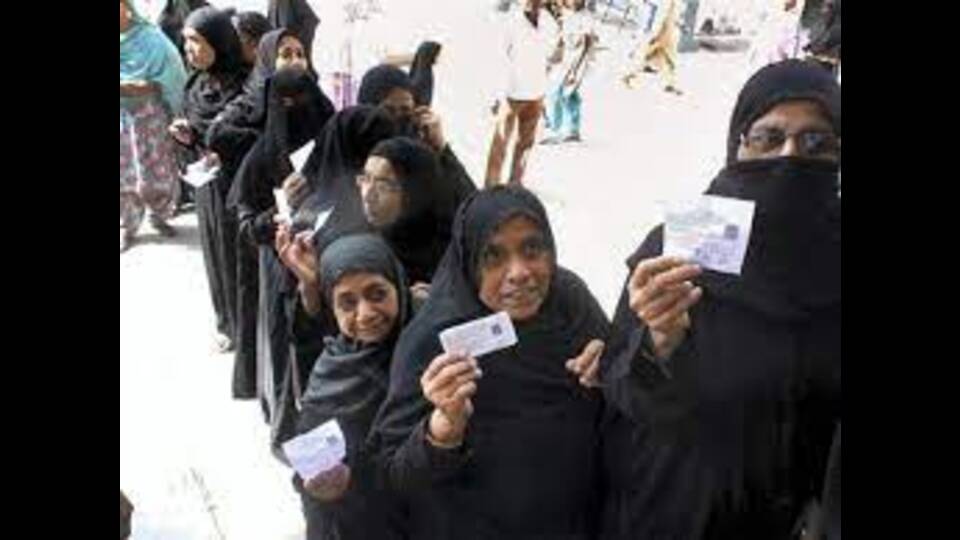
Muslim voters threw up a surprise in the urban local body (ULB) election with the way they voted. Reason: This time they used their discretion rather than voting en masse for any particular party as they used to do earlier.
“I will say Muslims are in experimental mode. They have come out of traditional realm and put some thought behind the voting pattern as their traditional line was not working,” said Athar Hussain, director, Centre for Objective Research and Development, Lucknow.
The extension of this pattern allowed the BJP or its allies, for the first time, to have a Muslim member in the state legislative assembly. Apna Dal (Sonelal) candidate Shafiq Ahmed Ansari polled over 50% votes and won Suar (in Rampur) assembly bypoll. The Samajwadi Party (SP) had fielded Anuradha Chauhan from the seat.
The community sided with AIMIM’s Mohd Anas in Meerut mayoral election as he ended a runner-up. The SP had given ticket to senior leader Atul Pradhan’s wife from a seat where OBC Muslims are in a sizeable number.
Similarly, the community by and large backed the BSP in Saharanpur, rejecting SP candidate Ashu Malik as an outsider. Or for that matter, their support extended to the BSP in Agra, and to the Samajwadi Party in Lucknow.
Moradabad, Jhansi and Ayodhya mayoral seats saw Muslim voters tilting towards the Congress. In Kanpur, voting pattern suggest Muslims were divided between the Congress and the SP. However, they went with the SP which came second and the Congress third. Both the parties had fielded Brahmin candidates on a seat which has 20% Brahmins and 18% Muslims.
“The Muslims used their discretion in voting after a long time. It is a matter of great interest they did in an election that is largely personalised,” said Tariq Raza Fatimi, retired professor of Halim Muslim PG College, Kanpur.
“This is an important drift since the 90s. Never before they have gone to various parties syncing their preference with local equations,” he said, adding the pattern sent out a message to political parties that now Muslim votes should not be taken for granted.
“One more aspect seen in this election was the indifference in urban Muslim voters that did not come out to vote. Urban Muslims seemed disappointed and there could be many reasons the political parties need to study and fix,” Hussain said.





