
 E-Paper






Leena Dhankhar is Senior Editor and Bureau Chief, Gurugram, at Hindustan Times, where she has spent over 17 years chronicling the transformation of one of India's fastest-growing urban regions. From starting her career as a crime reporter to leading the Gurugram bureau, her journalism has been defined by investigative reporting, in-depth storytelling and an unwavering focus on public interest. Over nearly two decades, she has reported extensively across crime, politics, civic governance, elections, real estate, environment, courts, sports, education and entertainment, covering Gurugram, Faridabad, Nuh and Palwal. Her reporting has exposed several major scams and systemic failures, including insurance frauds, waste management irregularities, illegal arms manufacturing units in Nuh, illegal mining in the Aravallis, organised crime networks and governance lapses affecting millions of residents. Known for her investigative work and exclusive stories, Leena has reported on high-impact national issues, including the Nicaragua charter flight carrying Indian migrants that was turned back amid allegations of human trafficking, exposing the growing network of illegal immigration rackets. Her work has also focused on gang wars, prison administration, juvenile crime, women and child protection systems, the functioning of the Juvenile Justice Board and Child Welfare Committee, and environmental challenges such as pollution, waterlogging and deteriorating civic infrastructure. Beyond hard news, Leena has extensively documented Haryana's rich heritage, forests and wildlife, bringing attention to the state's historical landmarks, biodiversity, conservation efforts and ecological challenges through immersive reportage and feature writing. Her journalism has consistently gone beyond breaking news. She has documented Gurugram's rapid urbanisation through long-form narratives and enterprise reporting on issues ranging from pothole-ridden roads, flooding and waste management to the changing social fabric of India's Millennium City. She also writes widely read feature columns, including The Outsider, Changemaker, and Concern for Gurugram, profiling people, places and ideas shaping the city's identity. Leena is the author of Gurugram School Murder, published by Juggernaut Books, a deeply reported account of one of India's most high-profile school murder investigations. She is currently working on her second book, an investigative work exploring some of India's most significant scams and fraud investigations. Beyond print journalism, she has expanded her storytelling through public speaking and digital media. She is a TEDx speaker and has produced podcasts exploring Gurugram's transformation, civic challenges and untold stories. Her work reflects a commitment to narrative journalism that combines rigorous reporting with compelling storytelling. A law graduate with an MBA in Human Resources, Leena brings a multidisciplinary perspective to her reporting, particularly on governance, public policy and legal affairs. She has travelled extensively across India to pursue investigative assignments, often reporting from remote locations and conflict-prone areas in search of stories that matter.
Gurugram cops to use AI system to flag traffic violators
Gurugram police said the system can identify vehicle attributes like colour and model, and verify pollution and fitness certificates


The district’s police have partnered with a private firm to implement an artificial intelligence-powered system that can detect fake vehicle registration plates through the city’s CCTV network.The system, called JARVIS (Joint AI Research for Video Instance Segmentation), scans number plates and cross-references them with Regional Transport Office (RTO) records to identify forged plates and stolen vehicles.
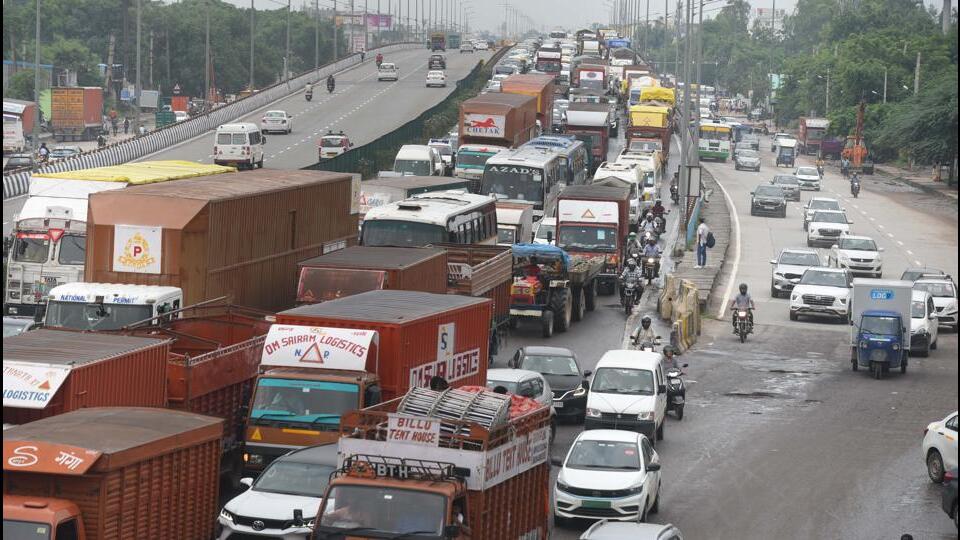
Police officials said the system has yielded results in law enforcement’s vehicle inspection efforts. “The technology has helped us identify defaulters using fake number plates and stolen vehicles within weeks of implementation,” said Gurugram police commissioner Vikas Arora.
The cameras cover major intersections including Hero Honda Chowk, Iffco Chowk, Rajiv Chowk and Shankar Chowk, along with main carriageways and internal roads.
Police officials said the system can identify vehicle attributes like colour and model, and verify pollution and fitness certificates. However, details about data privacy safeguards and storage protocols were not shared. According to Staqu Technologies, which developed JARVIS, the system helped identify 4,800 vehicles violating traffic rules at two checkpoints in the first week. The company’s CEO Atul Rai said the technology is being used by police departments in 11 states.
According to police officials, the JARVIS platform cross-references scanned vehicle number plates with government records, enabling the immediate identification of discrepancies or violations. ”The technology also scans vehicles’ pollution and fitness certificates, sending alerts to traffic police if these documents are expired, thereby streamlining enforcement efforts. The system’s ability to recognise vehicles based on physical attributes like colour and model further enhances police efficiency in tracking suspicious vehicles,” Gurugram police commissioner Arora, said.
Meanwhile, Rai said, “Given that our headquarters is also based here, this initiative holds special significance for us.” By analyzing audio-video data, the AI can efficiently identify vehicles violating traffic laws or attempting to evade detection using fraudulent number plates, Staqu Technologies officials added.





