E-Paper







Jasjeev Gandhiok is an Assistant Editor with Hindustan Times, where he covers environment, climate change, the clean energy transition and wildlife at the National Bureau. Gandhiok has over a decade of experience in journalism and is based in Delhi. He has reported extensively on Delhi and the National Capital Region (NCR). This includes the region's air pollution woes, a polluted Yamuna and on urban wildlife still thriving in the region. He joined HT in October 2021. Prior to that, he had five-year stint at The Times of India in Delhi, where he also covered Delhi, with a focus on environment and wildlife. Gandhiok has covered some recent events around the Capital too, ranging from the farmers' protests, the northeast Delhi riots and the CAA-NRC protests, reporting from the ground on all of these. He also travels across the country to report on how environment and climate change impact everyday life, while also writing on endangered species. His reports in 2019 on toxic leachate from Delhi's landfills led to the National Green Tribunal (NGT) taking suo motu cognisance and ultimately asking the state government to start bio-mining to flatten and remove all three landfills in the capital. He also closely tracks the implementation of government policies on climate, renewable energy and environmental protection. His focus remains on impactful, public-interest journalism which explains how environmental decisions affect people's everyday lives.
Samples collected, 11-member panel to probe Najafgarh drain fish deaths
Samples of the dead fish were sent to be tested on Friday, and committee members will carry out a field inspection before submitting a report to the authority next week, officials said.


The Delhi State Wetland Authority (SWA) has formed an 11-member committee to probe the currently unexplained deaths of hundreds of fish in the Najafgarh drain over the past 15 days, officials aware of the matter said on Friday.
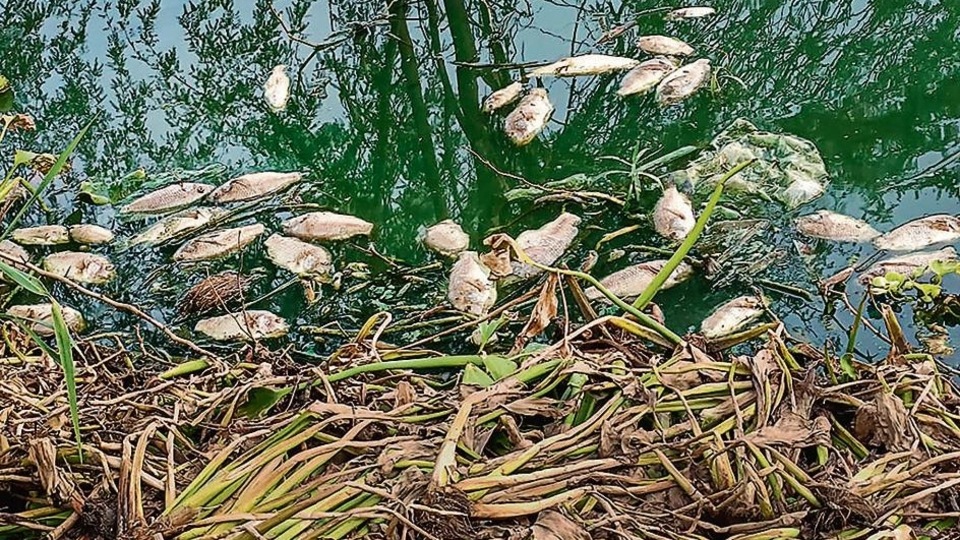
Samples of the dead fish were sent to be tested on Friday, and committee members will carry out a field inspection before submitting a report to the authority next week, officials said.
The committee includes independent experts as well as representatives from the fisheries unit of the animal husbandry department, the forest and wildlife department and the Delhi Jal Board (DJB) among others, officials added.
They added that the committee will also study results of the water samples collected by the Delhi Pollution Control Committee last Sunday. HT reported on Monday that people living along the Najafgarh drain, particularly near the Najafgarh Jheel in villages such as Jhuljhuli and Rawta, spotted dead fish along the drain and in village ponds (johads).
A senior SWA official, who asked not to be named, said the committee will carry out its own analysis. He added that the experts in the panel will also check the report by the Delhi Pollution Control Committee (DPCC) which is carrying out a separate investigation into the incident.
“The DPCC report is likely to come out in the next 24 hours. A number of tests are being run by them,” the official said.
Chief engineer of Zone I of the irrigation and flood control department, DPCC’s water scientist Nandita Moitra, Prof VK Minocha from Delhi Technological University, Manu Bhatnagar from INTACH, Ritesh Kumar from Wetlands International South Asia, Rakesh Chandra Agarwal of The Environment and Consumer Protection Foundation, representatives from the Delhi Jal Board, DPCC, Central Pollution Control Board, Delhi government’s revenue department, forest and wildlife department and the fisheries unit of the animal husbandry department will be part of the committee, the SWA official said.
A member of the committee, who also asked not to be named, said while fish samples were being dissected for possible causes, DPCC’s lab test results were awaited. “Based on these factors and the findings of these tests, we can ascertain what possible causes could be associated with the deaths. It could be either chemicals in the water, or poor dissolved oxygen (DO) levels in the drain’s water,” said a member.
Najafgarh drain connects the Najafgarh Jheel to the Yamuna.