
 E-Paper




‘Wait, watch’: Delhi to not raise alert level yet
The health department has been advised to enhance the preparedness to deal effectively with the emerging situation, LG Anil Baijal, who heads the DDMA, said in a tweet.




Yellow alert Covid-19 restrictions will continue in the Capital for the time being, the city’s administration decided on Wednesday, holding off on more curbs immediately if the next level according to its graded response action plan (Grap) is breached, while monitoring the nature of the outbreak and its severity.
The decision comes at a time when scientific and epidemiological evidence from other countries suggest the Omicron variant is significantly less virulent than Delta, and is likely to lead to mild, often asymptomatic disease, even if the surge is sharp.
“It was decided to continue with the existing restrictions imposed recently in view of rising cases and to keep a close vigil on the ground situation. The health department was advised to enhance the health preparedness to deal effectively with the emerging situation and to closely monitor bed occupancy besides strengthening the home isolation strategy,” lieutenant government Anil Baijal stated in a tweet.
Under the government’s Covid-19 graded plan Grap, curbs on activity and movement become stricter if the number of new cases, the positivity rate or the rate of hospitalisations breach certain threshold. On Wednesday, one of these thresholds – 1% positivity rate – was breached after a gap of 212 days.
“No fresh restrictions will be immediately imposed after the positivity rate remains over 1% for two consecutive days. The government is monitoring the situation and, will take any decision about imposing fresh curbs when the needs arise,” said a senior Delhi government official, who asked not to be named.
According to the health bulletin released by the government on Wednesday, of the 2,191 active cases, 55 were on oxygen support with the rest being asymptomatic or mildly symptomatic. The number of new cases were 923, comprising 1.29% of tests that were conducted.
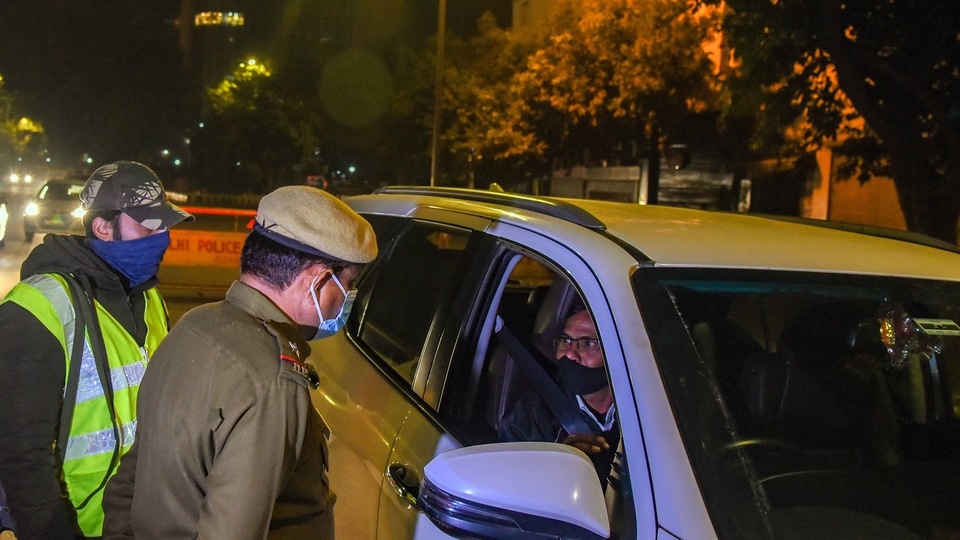
The yellow alert, triggered when positivity rate stayed above 0.5%, led to a night curfew, closing of schools, colleges, movie theatres and gyms, triggering concerns from parents, child health experts, and the business community. Most of these groups said the government must readjust to account for Omicron variant’s reduced virulence.
When amber alert is activated, public parks and gardens will have to close, Delhi Metro occupancy will need to be capped at 33%, restaurants and bars will need to shut for dine-in, and a weekend curfew will come in force.
Wednesday’s decision was taken in a meeting of the DDMA chaired by Baijal, with chief minister Arvind Kejriwal, deputy CM Manish Sisodia, health minister Satyendra Jain, and revenue minister Kailash Gahlot in attendance, in addition to Dr VK Paul from NITI Aayog, Delhi chief secretary Vijay Dev, AIIMS director Dr Randeep Guleria, and others.
The CM, people aware of the matter, said the DDMA should not rush to impose more curbs at this moment since the overall caseload was low and nearly 98% hospital beds were still vacant.
The people added that deputy CM Manish Sisodia suggested the emerging Covid situation should be closely monitored before more curbs are imposed otherwise there could be panic and people may be motivated to migrate back. On previous occasions, drastic curbs have triggered reverse migration leading to unchecked gatherings at interstate bus terminals.
DDMA also discussed at length whether it should make some amendments to the minimum criteria fixed under Grap for imposing the curbs, including whether the words “or” between the three factors be replaced by “and”.
If such a change is to be made, all three tests must be met for the next level of curbs, the amber alert: a positivity rate above 1% for two days, at least 3,500 new cases a week, and at least 700 oxygen beds in hospitals being occupied over a seven-day period.
“It was discussed whether positivity rate or new cases or hospitalisation should be given higher weightage in arriving at a decision to impose further curbs. No final decision was taken on changing the criteria even after discussion. It was decided that the DDMA should closely monitor the emerging situation and authorities should be asked to strictly enforce Covid-appropriate behaviour and strictly impose the curbs imposed under the first phase of restrictions,” a government official said not wanting to be identified.
“After detailed discussion with experts the need to strictly follow and enforce Covid-appropriate behaviour was emphasised upon especially in wake of rising cases of the Omicron variant. It was also reiterated to continue with the test, track and treat strategy with special focus on surveillance, delineation of containment zones, isolation of positive cases and close monitoring of home isolation cases so as to break the chain of transmission,” the LG tweeted after the DDMA meeting.
DDMA called upon all stakeholders for collective and concerted efforts to deal with the pandemic without lowering guard.
Dr Jugal Kishore, head of the department of community medicine at Safdarjung hospital, said that Covid positivity over 1% does not indicate as dangerous sign as it did with Delta variant. “Due to high transmissibility of the Omicron variant, more infection would be there in the community but this will not result in hospital admission and case fatality. Therefore, stringent restriction would be of no use. According to recent pre-print research from South Africa, it is found that infection due to Omicron develops more neutralizing antibodies to the variant and also to Delta variant. Omicron is acting as vaccine to replace previous severe variants with milder form which could limit the pandemic in coming time,” he said.
Confederation of All India Traders general secretary Praveen Khandelwal welcomed DDMA’s move not to go immediately go ahead with fresh economic and travel curbs. “The Covid situation appears to be under control, so the government should do away with odd-even restrictions on the markets and focus on strictly enforcing Covid appropriate behaviour. The night curfew should also be withdrawn because while protecting people from Omicron is important, protecting people from hunger is equally important,” said Khandelwal.





