
A fire in a Delhi home today can turn deadly in as little as three to five minutes — a fraction of the time occupants would otherwise have had to escape a blaze in homes that were built 25-30 years ago, according to an analysis by the Delhi Fire Service (DFS).
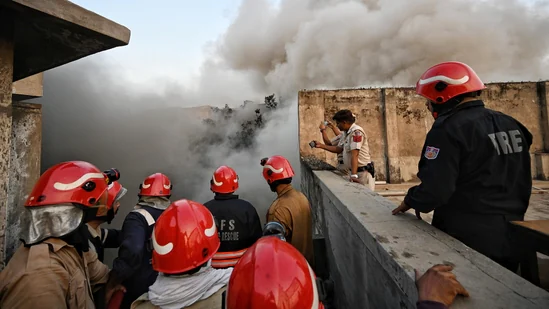
The change has been driven by a combination of modern construction, interior design and furnishing choices, which have made homes more energy-efficient and aesthetically appealing but potentially more dangerous during a fire. The risks were flagged during a review meeting held last month and chaired by Delhi Lt Governor Taranjit Singh Sandhu.
Modern construction and furnishings accelerate fire spread
According to documents presented during the meeting and seen by HT, the time taken for a fire to reach flashover has fallen from 15-17 minutes in an older Delhi homes to just 3-5 minutes in modern homes, a reduction of about three-quarters.
{{/usCountry}}According to documents presented during the meeting and seen by HT, the time taken for a fire to reach flashover has fallen from 15-17 minutes in an older Delhi homes to just 3-5 minutes in modern homes, a reduction of about three-quarters.
{{/usCountry}}Flashover is the point at which the hot smoke and gases gathering under the ceiling radiate enough heat to set everything combustible in a room alight almost at once. Anyone still in the room at that moment is unlikely to survive, and the fire then spreads quickly to the rest of the house.
Lower ceilings, false ceilings, open-plan layouts, sealed interiors and the widespread use of synthetic materials such as polyurethane foam, polyester, plastics and PVC have contributed to faster fire spread, according to the documents.
“Over the past 25-30 years, flashover time in Delhi homes has dropped from 15-17 minutes to 3-5 minutes -- a nearly 80% reduction driven by changes in construction and furnishing. Old ventilators release heat; modern rooms trap it and saturate quickly. Modern finishes vapourise into flammable gases and intensify the fire,” stated the presentation. “Synthetics burn 5-8 (times) hotter and release energy faster.”
Synthetic materials, sealed windows increase household fire risks
Older homes often had high ceilings, ventilators, compartmentalised rooms and furnishings made of natural materials such as cotton, wool and solid wood. Modern homes, by contrast, can trap heat and smoke, allowing temperatures to rise rapidly and leaving occupants with little time to react, the assessment noted.
Each of these changes speeds the fire up. A lower ceiling brings the layer of hot gas down towards the room sooner, and a false ceiling lowers it further.
Open-plan layouts remove the walls and doors that otherwise can sequester a blaze in one room, and sealed windows keep the heat in where ventilators would have let some of it escape. Synthetic materials, made largely from petroleum-derived products, catch fire more easily and burn hotter and faster than cotton, wool or solid wood. They also give off dense, toxic smoke, which kills more people in house fires than the flames do.
“Modern Delhi home is, by design, upgraded for comfort and aesthetics, but has accelerated flashover,” the presentation noted.
A senior DFS official, who did not wish to be named, said, “Investigation into recent fire incidents showed that the blaze had spread faster in houses with sealed windows and usage of modern construction materials.” The official urged people to use fire-resistant material for designing houses.
The assessment also found homes are where most of Delhi’s fires break out. Of the 7,387 fire incidents recorded in the 2025-2026 fiscal year, according to data cited by the DFS, residential buildings accounted for 5,506, followed by mercantile establishments (693), industrial premises (450), business establishments (301), storage facilities (200), assembly buildings (121), educational institutions (83) and institutional buildings (33).
Nearly 99% of the incidents — 7,312 — occurred in premises without a valid fire safety certificate or in low-risk premises, a category that covers most homes. Only 75 were recorded in moderate- and high-risk premises with a valid fire safety certificate.
Also read: 11-year-old boy dies in Delhi house fire while napping on sofa
Electrical faults and narrow lanes add to fire hazards
During the meeting, electrical overloading, low sanctioned electrical loads and hazardous wiring were flagged as key risks, all of them common causes of household fires. Unauthorised colonies and the regularisation of colonies without redevelopment were flagged alongside them. Many such colonies have narrow lanes, which a fire tender may struggle to get through.
The meeting also highlighted significant gaps in the fire service’s operational capacity. Against a requirement of 542 essential firefighting and specialised rescue appliances, the DFS had 222, leaving a shortfall of 320.
The shortage includes water tenders, water bowsers, foam tenders, mobile pumps and specialised rescue vehicles. The presentation also flagged the absence of several specialised vehicles, including turntable ladders of 42, 55 and 70 metres, hydraulic platform lifts, urban search-and-rescue tenders and hazardous-material vans.
A 2011 ministry of home affairs study on Delhi’s fire risks and hazards had identified critical deficiencies in manpower, equipment and fire stations, but its recommendations remained unimplemented, the presentation said. The study had recommended increasing the number of fire stations from 51 to 107, requiring 56 additional stations. The DFS estimates it needs an additional 17,910 operational firefighting personnel to run 120 fire stations round the clock.
Also read: Fire reported near North Block in Delhi, six fire tenders rushed to scene
Fire service proposes new vehicles, robots and response units
The DFS proposed fleet modernisation, including 197 new appliances, nine advanced water-tender systems, 18 firefighting robots and 50 quick-response vehicles across 90 police control room locations.
Experts too emphasised the dangers of the new-age construction and furnishing material.
“Cotton mattresses have been replaced by foam ones. Even our sofa sets use foam, and the fabric of curtains is also prone to catching fire quickly. Once these materials catch fire, they lead to significant smoke accumulation and there is no outlet for the smoke to escape. This has led to an increase in fatalities,” former director of Delhi Fire Service, Atul Garg, said.
Professor SM Akhtar, former Dean of Architecture, Jamia Millia Islamia, opined that ceiling height is a bigger factor. “Earlier, the ceiling height used to be 12 feet or even more but now it is 9 feet which leads to the smoke getting trapped. Coupled with congestion and houses being in close proximity, fires tend to spread faster.”
ABOUT THE AUTHOR
Saloni Bhatia is a journalist with over 15 years of experience in reporting and storytelling, with a strong focus on the Delhi government and political developments in the Capital. Over the years, she has closely tracked policy decisions, governance issues, and political shifts. She started off as an entertainment journalist but then moved to covering beats like crime and education. Her experience on the crime beat helped her develop an eye for detail and accuracy, while education reporting allowed her to explore policy impact on students, teachers and institutions. Outside the newsroom, she enjoys reading both fiction and non-fiction. She also has a keen interest in watching Bollywood films.
Stay updated with all top Cities including, Bengaluru, Delhi, Mumbai and more across India. Stay informed on the latest happenings in World News along with Delhi Election 2025 and Delhi Election Result 2025 Live, New Delhi Election Result Live, Kalkaji Election Result Live at Hindustan Times.
Stay updated with all top Cities including, Bengaluru, Delhi, Mumbai and more across India. Stay informed on the latest happenings in World News along with Delhi Election 2025 and Delhi Election Result 2025 Live, New Delhi Election Result Live, Kalkaji Election Result Live at Hindustan Times.
