
 E-Paper






Follow the latest breaking news, major developments and agenda-setting stories from India and around the world with the newsdesk at Hindustan Times. Operating round the clock, the desk brings together experienced editors, reporters and correspondents to deliver fast, accurate and contextual reporting across subjects that influence public policy, governance, business, society and international affairs. The HT News Desk covers politics, elections, government policies, the economy, business and markets, science and technology, the environment, law and order, infrastructure, education, climate issues and geopolitics, while closely tracking developments across states, institutions and global capitals. The team also leads coverage of major breaking news events, policy announcements, court proceedings, natural disasters, public emergencies and significant international developments. Reports published by the newsdesk are based on information gathered from reporters on the ground, official statements, government agencies, court records, regulatory filings, recognised institutions and other authoritative sources. Stories undergo editorial scrutiny and verification processes to ensure accuracy, fairness and relevance, and are updated as events evolve and additional information becomes available. Whether covering a key political decision in New Delhi, an economic policy shift affecting millions, a landmark court ruling or a major global event, the HT News Desk aims to provide readers with reliable, fact-based journalism that delivers not only the latest developments but also the context and analysis needed to understand their wider implications.
38 king cobra eggs hatch at Mangaluru's Pilikula Biological Park
Mangalore's Pilikula Biological Park has been closed till July 11 because of flooding and rain damage to some enclosures.


The Pilikula Biological Park in Mangaluru may be closed to visitors till Monday due to heavy rainfall that has flooded low-lying enclosures, but it is still welcoming new arrivals - 38 of them, infact.
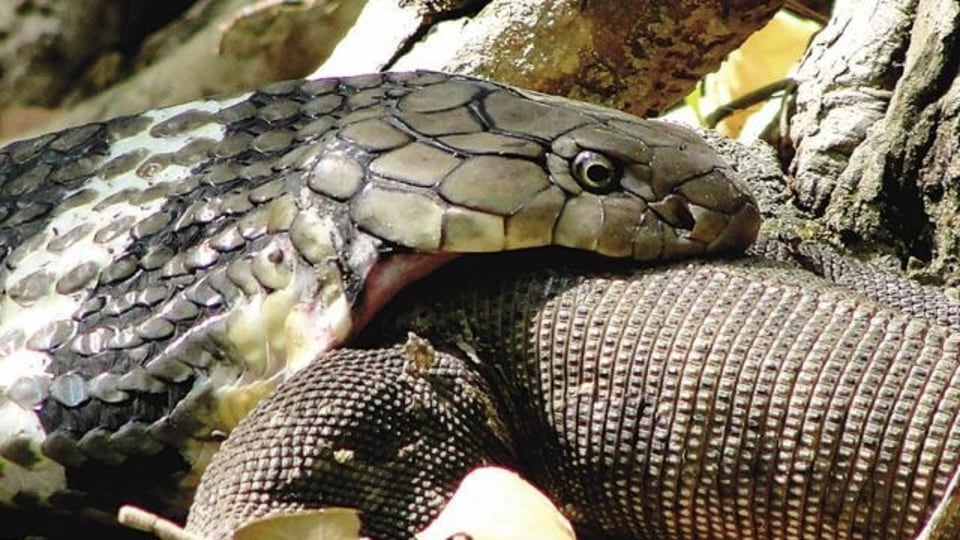
Eggs laid 75 days ago by an eight-year-old king cobra - Nagini - hatched over Thursday and Friday, providing a boost to animal conservationists. The hatchlings are part of the captive breeding of king cobras and the Pilikula Park is the only Indian zoo permitted by the Central Zoo Authority in this endeavour, park director Jayaprakash Bhandary was quoted by media reports.
"PBP was selected by the Central Zoo Authority for an exclusive conservation and breeding programme of giant squirrels and king cobras. For the first time in the country, captive breeding of king cobras was undertaken... currently the park has about 14 king cobras, of which five are female," Bhandary was quoted by The Times of India, adding the project was worth ₹20 lakh.
A similar project was sanctioned in 2010. The 2021/22 project was the second.
According to The Hindu, as part of the first project three female king cobras had laid 83 eggs between them and 65 young snakes (or neonates) had been released into the wild. Some of the others were sent to zoos across the country as part of an animal exchange programme.
Captive breeding projects like this and others in the country and around the world have looked to birth or hatch endangered species in controlled environments to both build healthy populations and release them into the wild after they've reached a suitable age and can fend for themselves.
A king cobra is the longest of the world's venomous snakes. They can grow up to 13 feet, according to National Geographic, and are found mostly in south and southeast Asia. They eat small mammals, lizards and birds, and its venom is powerful enough to kill an elephant!





