
 E-Paper





Why Amazon’s Rival to Starlink Is Struggling to Catch Up With SpaceX
There is plenty of demand for a Starlink alternative, but Amazon’s satellite arm, known as Leo, is facing setbacks.




Amazon.com is trying to build a satellite-internet business to rival Elon Musk’s Starlink. It is struggling to get off the launchpad.
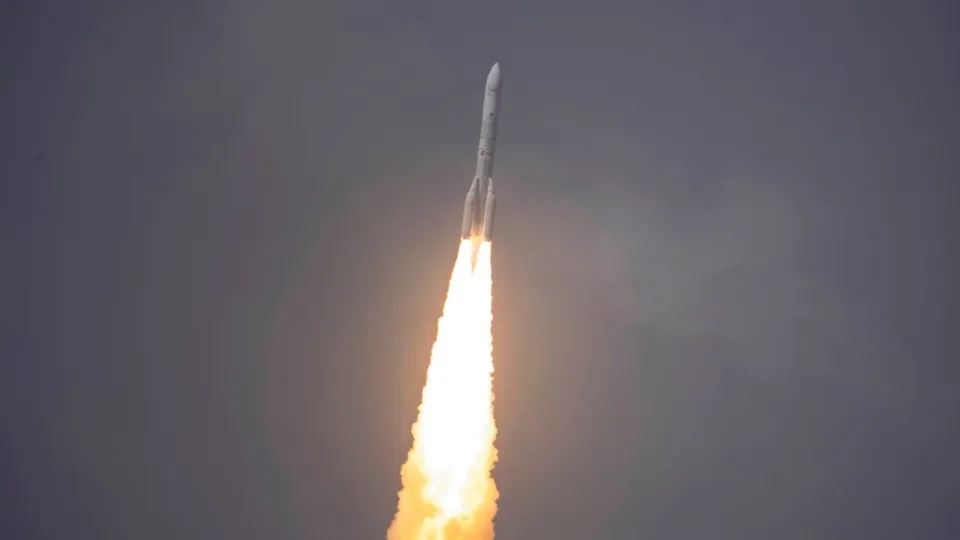
The company has faced a series of setbacks as it races to roll out commercial service by year-end, including a vehicle failure earlier this month. It suffered another small hiccup Monday when rocket company Arianespace briefly delayed a launch of 36 satellites. Amazon is still on track to meet its goal, a company spokesperson said.
Amazon Leo’s mission is to provide high-speed internet to remote places using a network of thousands of satellites. SpaceX’s Starlink has been doing that for years, but with recent controversy over its activity in Ukraine, governments and consumers are eager for another option.
Amazon’s biggest hurdle now is activating the satellites it has already built. The company plans to eventually field thousands of low-Earth-orbit satellites, but getting them into space has been a challenge.
Launch woes
Amazon Leo, which began as “Project Kuiper,” received Federal Communications Commission authorization in 2020. It has almost 400 satellites in orbit, while Starlink has more than 11,000, according to the companies.
While Starlink has its own SpaceX vehicles to launch satellites, Amazon relies on a mix of third-party providers, including Jeff Bezos’ Blue Origin. The May explosion of Blue Origin’s New Glenn rocket delayed the launch of Amazon Leo satellites, while its 40-satellite launch using United Launch Alliance’s Vulcan vehicle failed earlier this month.
“Amazon seems to have been able to produce these satellites at scale and they’re backing up in a warehouse,” said Clayton Swope, the deputy director of the Aerospace Security Project at the Center for Strategic and International Studies, a think tank.
Swope, who formerly worked on the Amazon satellite project, compared the launch-vehicle bottleneck to the frustration of a ride-share on a busy day. “I’m waiting 30 minutes for an Uber. I don’t have a ride to get to where I’m going,” he said.
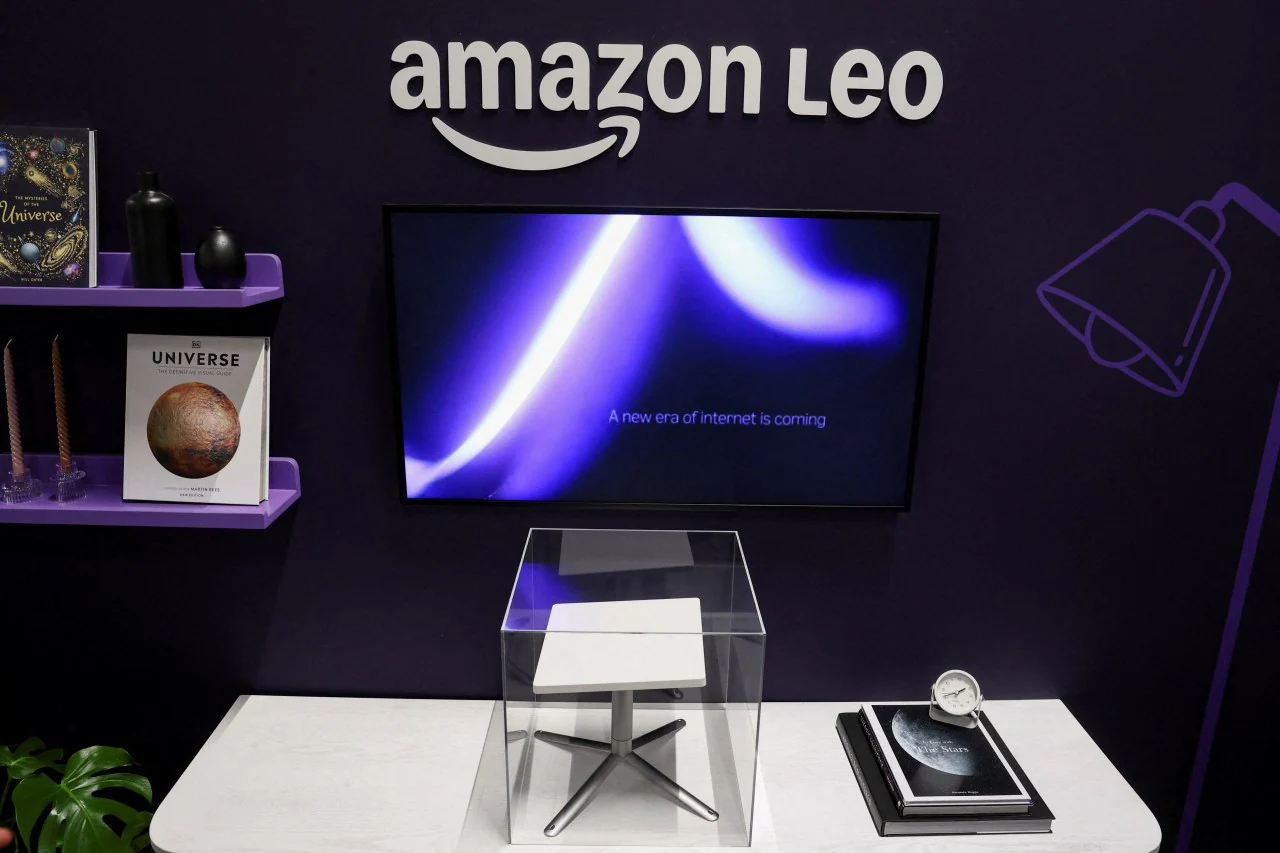
Amazon works with a variety of launch providers, including SpaceX, which it says reduces the risk of depending on a single rocket. It said it has moved up several missions with SpaceX’s Falcon 9 rocket.
Washington officials have helped clear a path for the new satellite network. The FCC in June waived a requirement that Amazon have more than 1,600 satellites in orbit by the summer. Meanwhile, Commerce Department policies have encouraged states to steer some federal broadband grants to both Starlink and Leo, rather than just to traditional fiber-optic cable companies.
The Commerce Department said the administration’s broadband policies support innovation and avoid picking favorites among internet technologies.
High-cost operation
Amazon, America’s largest company by annual revenue, is one of the few companies with the financial heft to try to build a satellite fleet.
Each satellite costs Amazon $2 million and the company is spending at least $4 billion on Leo this year, according to Mark Mahaney of Evercore ISI. Amazon declined to comment on the estimates.
“Doing stuff in space at scale is expensive—doing a broadband constellation in space at scale is particularly expensive,” Swope said, citing the high manufacturing and launch costs.
Starlink worries
In October, The Wall Street Journal reported that Musk ordered a slowdown of a military-grade version of his Starlink service that Ukraine relies on to target Moscow’s military and defend against Russian missile and drone barrages. The disruptions reignited a debate over the geopolitical consequences of SpaceX wielding a near-monopoly over a vital military technology.
“The industry is desperate to have a counterweight to SpaceX,” said Chris Quilty, an analyst and partner at research and advisory firm Quilty Space.
Musk has said that the U.S., rather than SpaceX, controls a government version of his satellite service called Starshield.
He said at the New York Times DealBook Summit last week that the company has denied Ukrainian President Volodymyr Zelensky’s requests to use Starlink’s commercial satellites for offensive military actions. When asked about Zelensky’s claim that Starshield was slowed down, Musk said, “That’s false.”
After the interview, Zelensky told CNN, “When I said that Starshield doesn’t work, it was 100% truth.”
What’s next for Amazon Leo
Amazon has a lot riding on its year-end goal for launching commercial service.
Its deal to buy satellite operator Globalstar, announced earlier this year, is part of its effort to link consumer smartphones with satellite internet connections.
Amazon has also signed agreements to provide in-flight Wi-Fi to Delta and JetBlue. Delta Chief Executive Ed Bastian told Bloomberg recently that he was confident in his decision to not choose Starlink, saying the airline plays “the long game.”
After the Vulcan launch failure earlier this month, Musk posted a photo on X of a skeleton, writing, “I found a pic of ‘the long game.’”
Write to Isabella Simonetti at [email protected] and Drew FitzGerald at [email protected]





