
 E-Paper




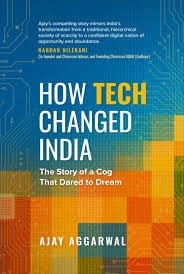
Review: How Tech Changed India by Ajay Aggarwal
There’s much to learn much from this book that weaves the author’s personal journey with the growth of the country’s tech sector.

 Prefer HTon Google


Ajay Aggarwal’s How Tech changed India; The Story of a Cog that Dared to Dream should actually have been titled How Tech Changed Me – The Story of Some People who Dared to Dream. An understated man though he has little to be modest about, the author is blasé about his journey; his hits and particularly his misses. Refreshingly honest, he perceives and presents his experiences without being judgemental and is almost as diffident about his successes as he is dispassionate about his failures.
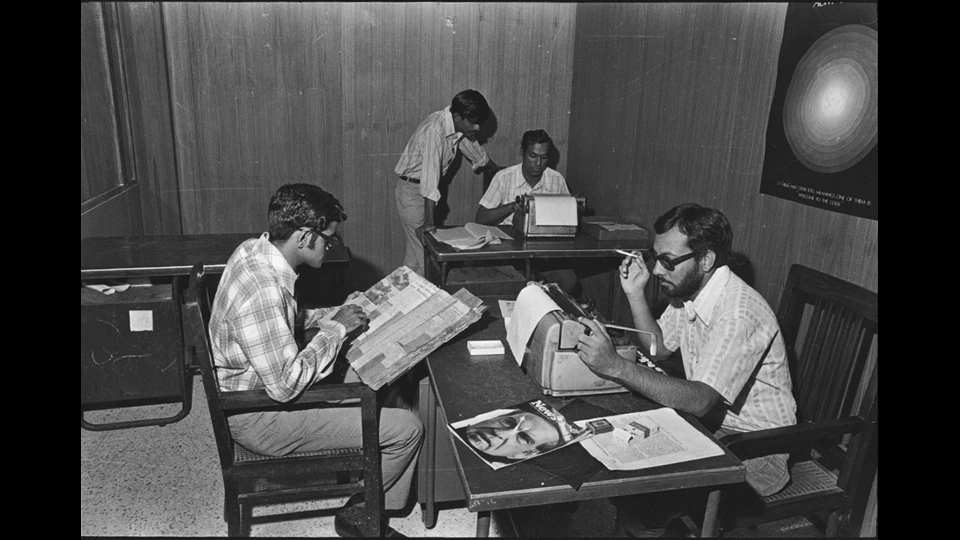
Aspiring entrepreneurs can learn much from this book that weaves Aggarwal’s personal journey into the story of the growth of a specific area of India’s tech sector. Indeed, they will learn much more from this volume than they ever will from how-to books on making quick US$s and potboilers about tech unicorns. Also, since it covers a sizeable period of time from the 1970s to the present, How Tech Changed India serves as a rich repository of information about a period before the existence of the Internet and mobile telephony. The young reader will be shocked to learn of the many obstacles that had to be overcome before it became possible for them to get into the posh campuses they work in today.
Aggarwal begins his professional story by recounting how, as a schoolboy he handcrafted small one-band, one station, transistor radios for cricket commentary. An avid fan of the form that was once all that was available to the cricket mad public, he stood outside cinema theatres and sold them as he thought, rightly, that others too wanted something similar. It’s the classic garage start-up story, which in the world of contemporary success fiction, might have ended with him becoming the ‘transistor king’. Only that was a different time and life had other plans in store. He grew up and got a job servicing the electronic calculators - table models with red/green neon displays - that had just been introduced. The name of the company was DCM Data Products; in that office was a cabin occupied by a certain Shiv Nadar.
Running parallel to the nation’s mainstream tech story, Aggarwal writes about the people who played important role in his life – for good and for bad. Rules that had to be followed, others that were meant to be broken; processes that were diligently pursued and obstacles that were overcome. Back then, money and financing were never enough. As always, timing played a major role in both success and failure, the latter more so.
Along the way, the reader learns of the evolution of technology – the move from calculators to electronic typewriters, microprocessors, desktop computers, POS and its software, the Internet, PCs to laptops, the onset of outsourcing, and more. Thankfully, the book stops with only a casual mention of AI (without which, it seems, these days, you can’t even cook an omelette).

Alluding to the desperately small percentage of start-ups that actually become successful, the author points out that nobody acknowledges failures. It is true that there is a much greater interest in those who proclaim on LinkedIn that they are ‘humbled to announce series 5 funding’. This book is one of the few that touches on the subject of failure.
This is because Aggarwal believes that success is not possible without grappling with failure. Above all, he reiterates that customer service is the focus.
So, here’s a question: What is the meaning of service? In exact terms it is “an intangible economic activity, action, or performance that delivers value…” This is one of the book’s important contributions. In practical terms, what this means is the importance of delivering to customers on the due date, irrespective of obstacles (holidays/accidents/octroi etc.). That is what makes all the difference between a great organization and an ordinary one.
Aggarwal recalls carrying, delivering and installing three printers as a service engineer. Each weighed two kilos; that’s three large boxes, a tool kit and a personal kit. After a particularly fraught bus journey, he reached Obra, a town in UP, in the dead of night. In the pitch dark with nowhere to rest, he camped on the side of the road. Next morning, he discovered he had arrived on a public holiday. Undeterred, he went to the executive engineer’s home, persuaded him to watch the demo, delivered the printers, and caught the only bus back to Delhi on the same day.
READ MORE: Ajay Aggarwal: “It is the cogs that make things happen”
There is much to learn from this book. One interesting insight is the revelation that “The customer feeds you, not the company”. It is a signal lesson that only the most successful people know.
And then there was the time, after yet another difficult trip, when, expecting a good word, Aggarwal’s younger self told his boss about all the difficulties he had overcome. “You are paid to do a job, you did it,” was the terse response. Clearly, back then, the world was a more no-nonsense place.
How Tech Changed India is both an interesting and a nostalgic read. Hopefully, it will encourage more individuals to put down their own stories about the long road they, and the nation, have traversed.
Rajesh Pant is a retired corporate professional who’s professional journey spans the salesman-to-CEO route. He has worked at Lintas, Citibank and Sony Entertainment Television. He also co- founded, unsuccessfully, an IT startup!





