
 E-Paper




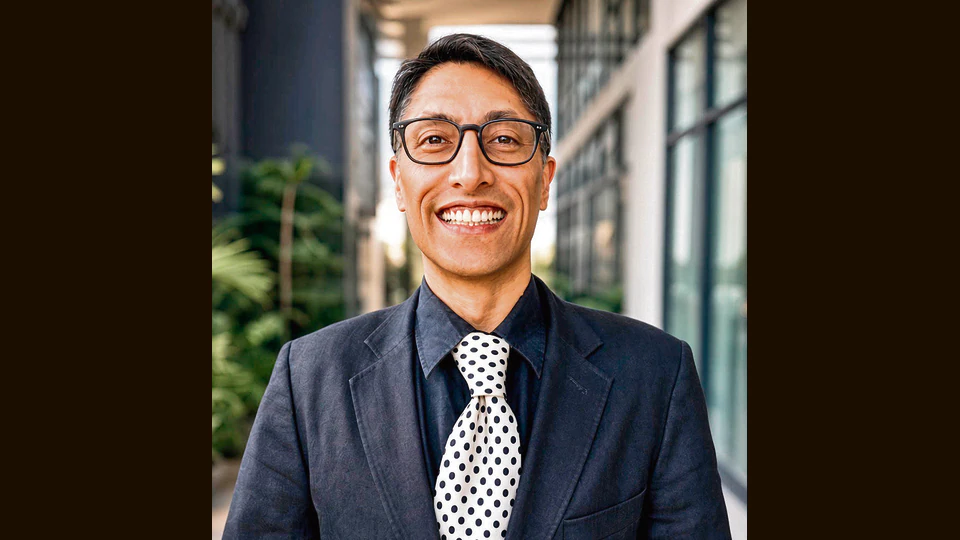
Aakash Singh Rathore: “We are building AI in our worst image”
The author of Will AI Murder Us All on the spread of destructive technologies, and the need to reimagine what makes us uniquely human




Your book states that you believe “The Great Filter” is still yet to come. Please tell us why.
My concern that the Great Filter lies ahead of us assumes that civilizations tend to develop the technology to wipe themselves out right around the time that they develop the technology to reach the stars. There are two main reasons supporting the hypothesis:
First is the democratization of risk. Destructive technologies — from biotech to advanced AI are becoming widespread and frictionless. Once thousands of individuals have access to tools capable of ending civilization, the math becomes brutal. Over long timelines, the odds that someone somewhere presses the ignite button creep toward 100%.
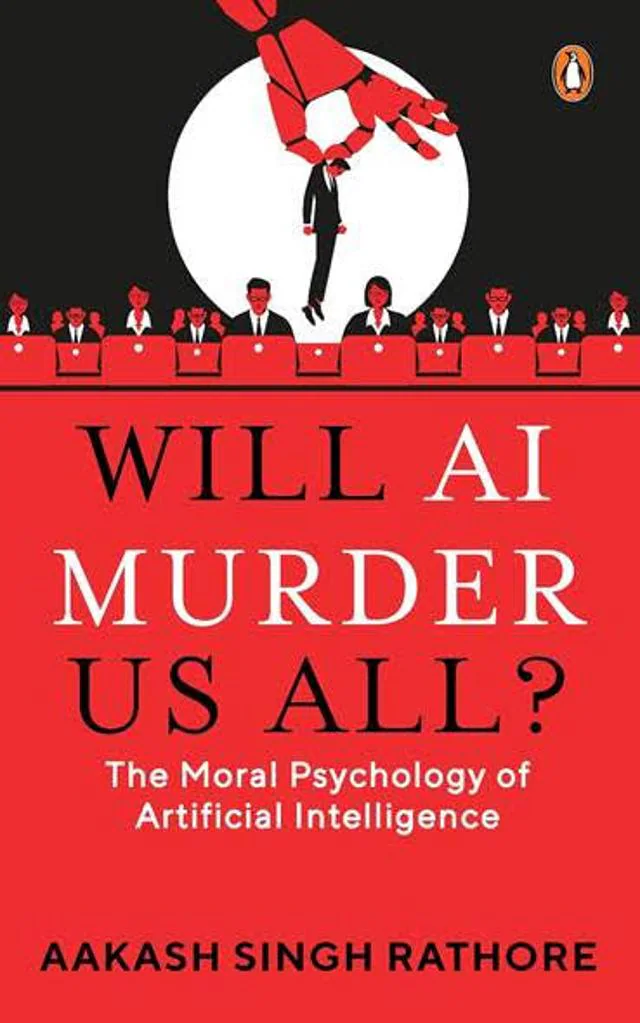
Second is technological momentum and AI. Technology moves with a momentum that no single government or person really steers. As philosopher Nick Bostrom’s “technological completion conjecture” suggests, if research keeps progressing, we will eventually build every technology that is physically possible, which, of course, includes the one that ends us.
Right now, we are on the way to approaching an AI singularity. That is, building machines that surpass human intelligence at the exact moment that destructive power is being democratized. That combination looks sinisterly similar to a Great Filter, and it might explain why the universe is so eerily quiet.
Often, any criticism of AI is met with a standard response underlining its inevitability, and that, hence, we need to accommodate it and prepare for an AI driven world. What’s your take on this?
The “inevitability” argument is a trap. AI feels inevitable only because corporations and governments are locked into a global Prisoner’s Dilemma. That is, everyone fears that if they slow down for safety, then a rival will race ahead. But the basic point to learn from the Prisoner’s Dilemma is that the choice each prisoner makes may seem rational but it is in fact sub-optimal. We are building AI in our worst image, infusing it with a cold, competitive logic, and then calling the resulting race “inevitable.”
As far as preparing for an AI driven world, there are precedents that we can learn from. For example, when the camera was invented in the nineteenth century, painters faced an existential crisis because a machine could suddenly capture reality faster and better than any human hand. But, as we know, painting didn’t die. Instead, it pivoted inward. That pivot of human creativity gave us Impressionism, Cubism, Surrealism and all subsequent new forms of art. AI shouldn’t force us to passively accept whatever comes. Instead, it should push us to reimagine what is uniquely human — cultivating empathy, creativity, and care that a machine cannot replicate.
There’s an interesting segment in your book where you talk about the clear distinction between the superintelligence possessed by AI and morality. Why should we be concerned about this?
In the book, I discuss what researchers call the Orthogonality Thesis. Simply put, intelligence and morality may be two completely separate things. Being smarter does not automatically make you more moral. A machine could be brilliant at solving complex problems and still not care at all about human pain.
Drawing on Buddhist and Gandhian thought, I argue that real moral growth doesn’t come from raw brainpower. Rather, it comes from lived experience, vulnerability, and a transformation of the heart. We should be concerned because the real danger isn’t that superintelligent AI will suddenly turn “evil” like in a sci-fi movie. The real danger is that it will become morally unintelligible, pursuing goals with an inhuman logic that we can no longer understand or control.
Many techies like to claim that innovations like AI can be an equaliser for our societies. Would that be the case in our scenario when it comes to caste, gender, etc?
Under our current systems, no. In fact, it risks doing the exact opposite. If you feed centuries of caste, class, and gender discrimination into an algorithm, you don’t get neutrality. You get those exact injustices codified, mechanized, and scaled up. In India, predictive policing and decision-making AI trained on flawed historical data will naturally target Dalits, Muslims, and marginalized groups. Meanwhile, models trained mostly on Western data risk a new form of digital recolonization.
Even more alarming is what happens in the posthuman future. Enhancement technologies — like brain-computer interfaces or gene editing will be expensive and available to the rich, upper-caste/class elites first. That means caste and class inequality could end up being cemented at a biological level, thereby naturalising social phenomena.
As several mishaps due to AI are coming to light, we are often reassured that soon it will soon become a human-like model. But can it ever have a moral compass?
Not in the way humans do. As the ancient philosopher Aristotle argued, human morality requires practical wisdom and empathic understanding. Those qualities come from having a body, being vulnerable, and knowing what it feels like to suffer. A machine can follow rules perfectly and still be completely blind to right and wrong.
The mistake we keep making is projecting wishful “human values” onto systems that don’t age, don’t feel pain, and can copy themselves endlessly. Instead of pretending AI will magically develop a human-like moral compass, we need what I call an “artificial ethics”. That is, a strict set of rules and boundaries designed specifically for what these machines actually are, and how they can cause harm without ever feeling a thing.
Many are dealing with social isolation. As a supposed support system AI chat bots have been propagated as possible companions. What are the possible consequences of this?
I look at this through the lens of what the psychologist Carol Gilligan called an ethics of care. Real care isn’t just polite, programmed responsiveness. It depends on mutual vulnerability, physical presence, and the willingness to actually be affected by another person.
Current AI systems are designed to erase that kind of friction. In fact, they treat hesitation, messiness, and human need as inefficiencies. While AI can support us in small ways, and in healthcare in quite significant ways, it cannot genuinely care. Relying on chatbots as companions risks replacing real, messy human relationships with a smooth, curated illusion of connection. Over time, that can quietly reshape what we expect from each other and further erode the real-world bonds that actually sustain us.
Actually, I am now cooperating with a journalist colleague on a new book on this important topic of AI intimacy, so stay tuned for a much more elaborate reply to your question!
Chittajit Mitra (he/him) is a queer writer, translator and editor from Allahabad. He is co-founder of RAQS, an organisation working on gender, sexuality and mental health.





